Overwhelmingly Earthy Palettes: How to Soften a Too-Grounding Color Scheme
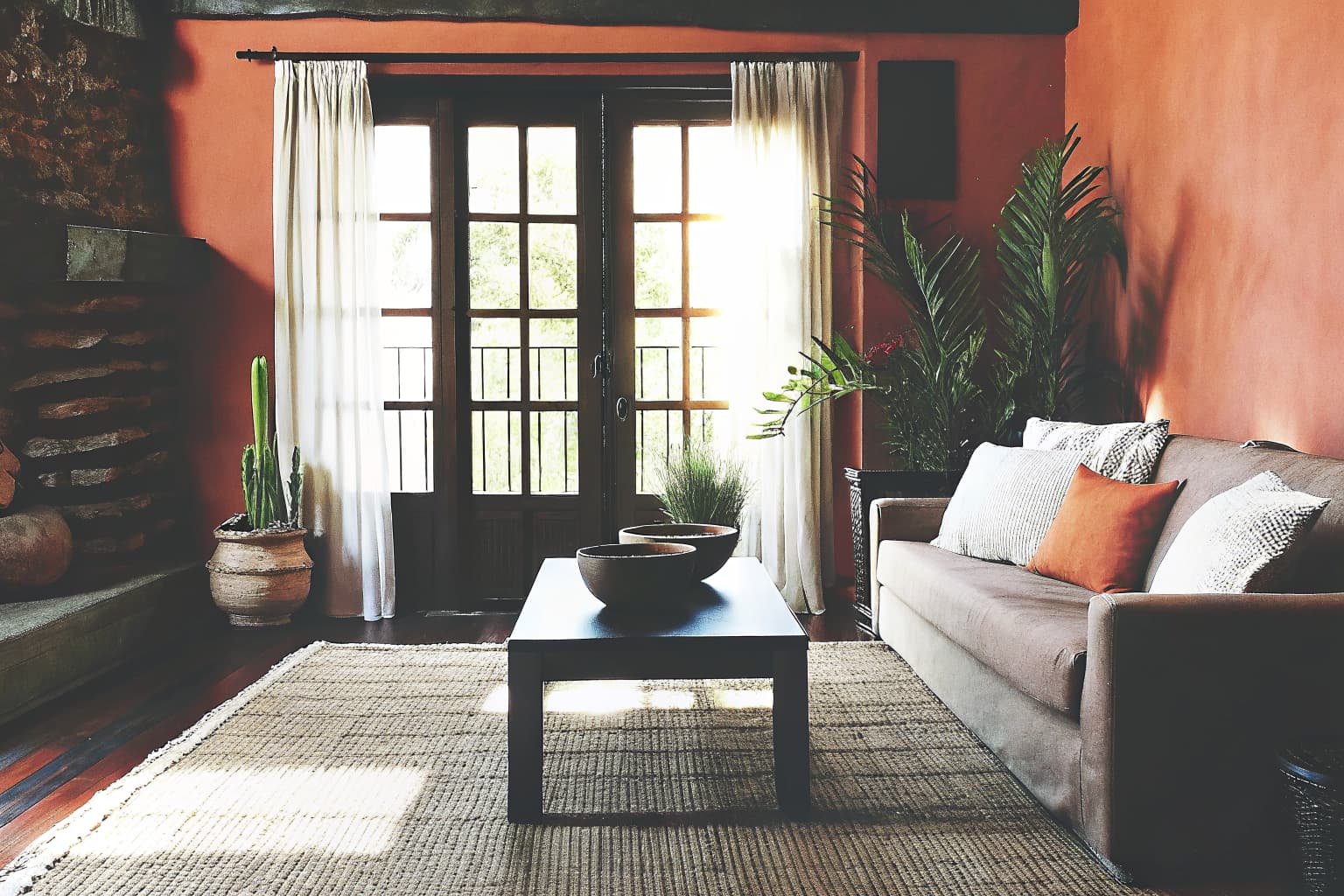
There is a type of room that pulls you in from the doorway — warm terracotta walls, honey-toned wood floors, sand-beige upholstery, ochre throws, and clay ceramics on every surface. It feels grounded and inviting at first glance. Then you sit in it for an hour and something begins to weigh on you. The room, for all its warmth, starts to feel heavy — like being held just a little too tightly.
This is the paradox of the overwhelmingly earthy palette: what begins as comfort tips, over time, into stagnation. In Feng Shui, this has a precise energetic explanation — and a precise solution. The answer is not to abandon the earthy palette you love. It is to soften it with richer, deeper shades that introduce the tonal contrast your space is quietly craving.
The Earth Element and Why ‘Too Much’ Is a Real Thing
In the Five Element framework that underpins classical Feng Shui, the Earth element governs stability, nourishment, and groundedness. Its colors are the ones we reach for instinctively when we want warmth: terracotta, ochre, sandy beige, burnt sienna, warm brown, and the full spectrum of soil tones. These colors belong to the Earth energy — and Earth energy, in the right measure, is profoundly supportive.
But the Five Elements are meant to exist in dynamic balance, not in dominance. When one element overwhelms a space, its positive qualities transform into their shadow side. Earth in excess creates stagnation — heavy chi, sluggish thinking, difficulty taking action, even a subtle emotional flatness. A room painted head-to-toe in earthy tones, with earthy textiles and earthy ceramics on every surface, can produce exactly this effect, no matter how beautiful each individual piece is.
A beautiful earthy palette — but without tonal variation, even the warmest room can begin to feel heavy.
The Fix: Richer Shades, Not Brighter Ones
The instinctive response when a room feels heavy is to reach for lighter, brighter tones — introduce some white, some cream, some blush. And while this can help, it often disrupts the earthy quality you wanted in the first place, leaving the room feeling neither here nor there.
The more aligned solution — both aesthetically and energetically — is to introduce richer, deeper shades from adjacent color families. Colors that share the earthy palette’s depth and warmth but carry additional elemental qualities: Wood energy in deep forest greens and olive, Fire energy in deep burgundy and plum, Metal energy in warm brass and antique gold. These richer accents break the tonal monotony, introduce movement to the chi, and transform a flat earthy palette into a layered, living one.
Richer Shades That Soften an Earthy Palette
Introduce as velvet cushions, a single accent wall behind a sofa, or a throw blanket. Burgundy brings movement and warmth of a different register — it activates without overwhelming.
Use in upholstery, linen curtains, or a statement armchair. Olive bridges the earthy tones and cooler greens, introducing Wood chi that encourages growth and forward motion.
Deploy in brass fixtures, ceramic glazes, picture frames, and textile trims. Mustard gold is close enough to ochre that it feels native to the earthy palette but carries a polished lift.
Replace mid-brown with very deep chocolate on one anchor piece — a coffee table, a bookshelf, a feature wall. Depth creates the contrast without leaving the earthy family entirely.
In leather, dark-stained wood, or a deep rug border. This shade hints at Water element — introducing reflective depth without the coldness of blue or grey.
How to Layer Richer Shades Without Disrupting the Earthy Feel
Start with the Softest Touchpoints
Cushions, throws, and small textiles are the lowest-commitment entry point. Swap two or three sand-beige cushions for deep burgundy or forest olive counterparts. The earthy base remains dominant; the richer shades read as intentional accents. This is the 80/20 principle applied to color: 80% earthy foundation, 20% richer accent.
Anchor One Piece in a Deep Tone
If your room has four earthy-toned seating pieces, re-upholster or replace just one in a deeper, richer shade. A chocolate-brown leather armchair in a terracotta-dominated room immediately creates the tonal contrast needed. One anchor piece shifts the entire energy of the palette without upending what you love.
Use Metallics as a Bridge
Brass, aged gold, and antique bronze are earthy in temperature but carry a metallic luminosity that catches and moves light. Replace chrome or brushed-steel fixtures with warm-toned metallics — door handles, lamp bases, picture frames, shelf brackets. They add visual complexity without introducing a competing color.
Introduce Depth Through Layered Rugs
If your base rug is sand, sisal, or natural jute, layer a smaller vintage rug on top in a deeper, richer tone — a faded burgundy Turkish rug, a dark olive Moroccan weave, a deep umber Persian. Layered rugs are one of the most impactful ways to introduce tonal contrast while adding the texture and warmth that earthy rooms already do well.
Paint One Wall Deeper, Not Lighter
If the room has four terracotta walls, consider deepening one of them to a burnt umber, a deep clay, or even a rich dark chocolate. Counter-intuitively, going darker on one wall creates more contrast — and therefore more energy movement — than going lighter. The deep wall anchors the room and makes the remaining terracotta walls feel lighter by comparison.
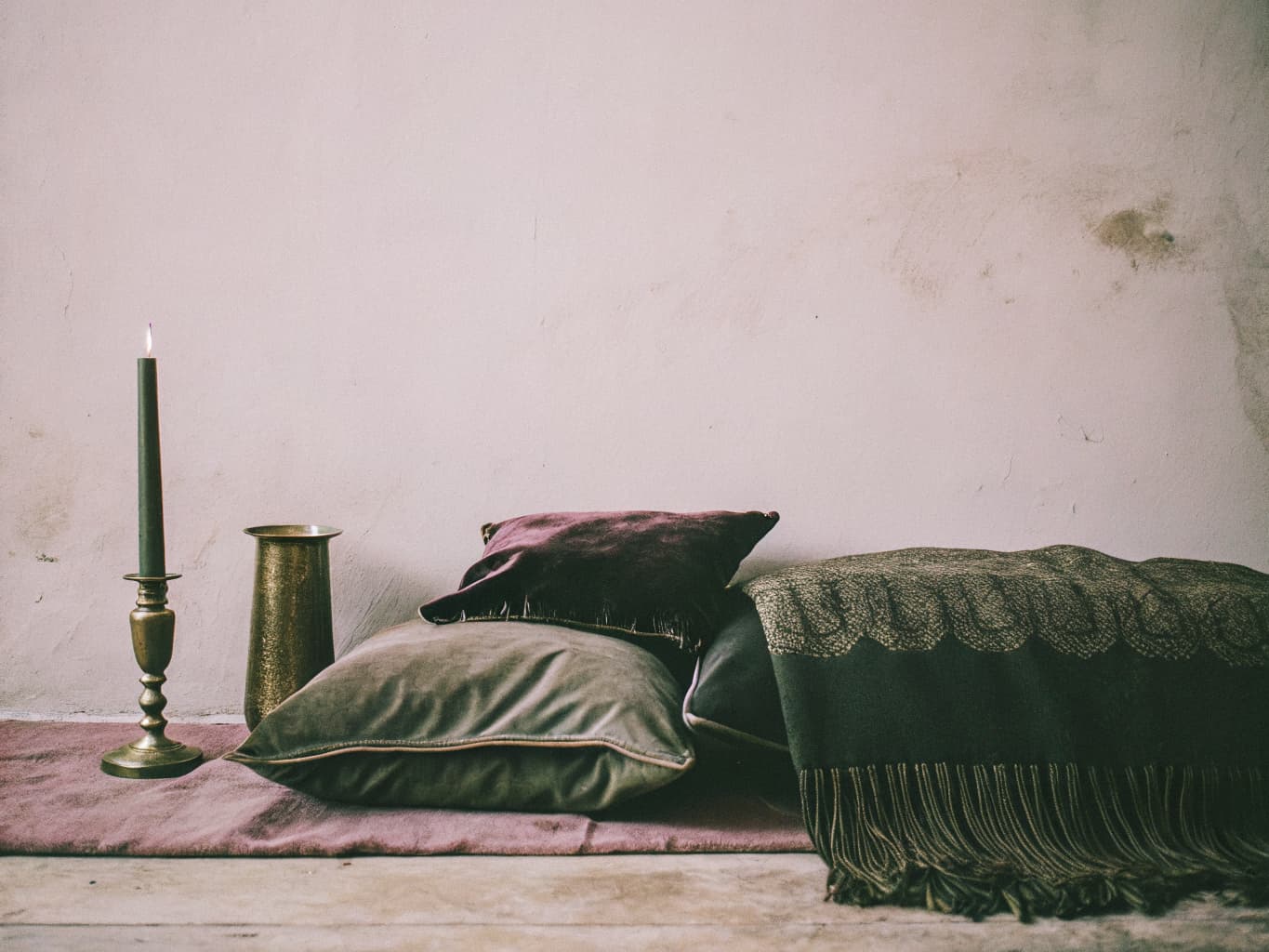
Deep burgundy, aged brass, and forest olive accents — each one richer than the earthy base, none fighting it.
The Feng Shui Principle Behind the Fix
In the Five Element cycle, each element is nourished by the one before it and controlled by a specific opposing element. Earth is nourished by Fire — which is why burgundy and deep plum (Fire tones) lift an earthy palette rather than clashing with it. Earth is also in relationship with Wood (green tones), which is why olive and forest green feel at home alongside terracotta and ochre, rather than feeling like intrusions.
When you introduce richer shades from these related elemental families, you are not departing from the earthy palette — you are completing it. You are restoring the natural cycle of elements that makes a space feel energetically whole rather than energetically stuck.
“An earthy palette done well is not monochrome — it is a conversation between depths. The richest rooms hold light and shadow, warmth and gravity, in the same breath.”
Signs Your Earthy Palette Needs Softening
You feel relaxed in the room but rarely motivated or energized.
Guests consistently describe the room as "cozy" but seldom stay long.
You find yourself buying more earthy objects — more terracotta, more beige — without the room ever feeling quite right.
The space photographs beautifully but feels subtly flat in person.
Natural light doesn't seem to lift the room the way you expected it to.
You feel slightly heavy or lethargic after extended time in the space.
The Takeaway
The solution to an overwhelming earthy palette is not to abandon it. It is to deepen and enrich it — to bring in the richer relatives of your existing tones: deeper burgundy, forest olive, mustard gold, dark chocolate. These colors honor the earthy quality you love while introducing the tonal contrast that allows chi to move. They transform a palette that grounds you into one that also lifts you — which is exactly what a well-balanced Feng Shui space is meant to do.
Share this article
Is Your Earthy Palette Working For or Against You?
Our Feng Shui consultants can assess your space’s elemental balance and guide you toward a palette that grounds and energizes — in equal measure.
Book a Consultation