Maximizing Yin Energy: Balance the Energy in Your Home Based on Each Room’s Purpose
In Feng Shui, every home contains two complementary forces: Yang energy — active, bright, upward, expansive — and Yin energy — receptive, quiet, inward, restorative. Most modern homes are built and decorated with an unconscious Yang bias: bright overhead lighting, high contrast, open plans, and stimulating color. The result is a home that feels energizing in short bursts but never truly lets you rest.
The real art of Feng Shui is not choosing between Yin and Yang — it is calibrating the right balance for each room based on what that room asks of you. A bedroom asks you to surrender. A kitchen asks you to produce. A home office asks you to focus. Each purpose calls for a different ratio of Yin to Yang energy, and the room’s design should reflect that ratio at every level: color, light, texture, form, and sound.
What Yin Energy Actually Is
Yin is the dark half of the Taijitu — but darkness here is not negative. It is the quality of cool water, of moonlight, of deep soil, of winter rest. Yin energy moves slowly, settles downward, holds inward, and receives rather than projects. Its qualities in a living space manifest as: lower light levels, curved and soft forms, cool or muted color palettes, heavy and textured materials, quietness, and a sense of enclosure that feels protective rather than confining.
When a space has too little Yin, occupants feel wired but not inspired, busy but not productive, tired but unable to sleep. When a space has too much Yin without any Yang counterbalance, it becomes stagnant — heavy, depressive, unmotivating. The goal is always proportion, and the proportion is always room-specific.
The Qualities of Yin in a Living Space
Light
Dimmer, warmer, and layered rather than overhead
Color
Cool blues, deep greens, soft greys, dusky rose, slate
Form
Curved, rounded, and low-profile rather than angular and tall
Texture
Soft, heavy, and absorbent — velvet, linen, wool, stone
Sound
Still, quiet, or masked with flowing water sounds
Energy direction
Settling and gathering rather than expanding outward
Room by Room: The Right Yin–Yang Ratio
No two rooms in your home should carry identical energy. The bedroom and the kitchen are energetic opposites — and designing them the same way is one of the most common sources of energetic discomfort in modern homes. Here is how to calibrate Yin and Yang for each space based on its primary purpose.
The Bedroom — Strongly Yin (80% Yin / 20% Yang)
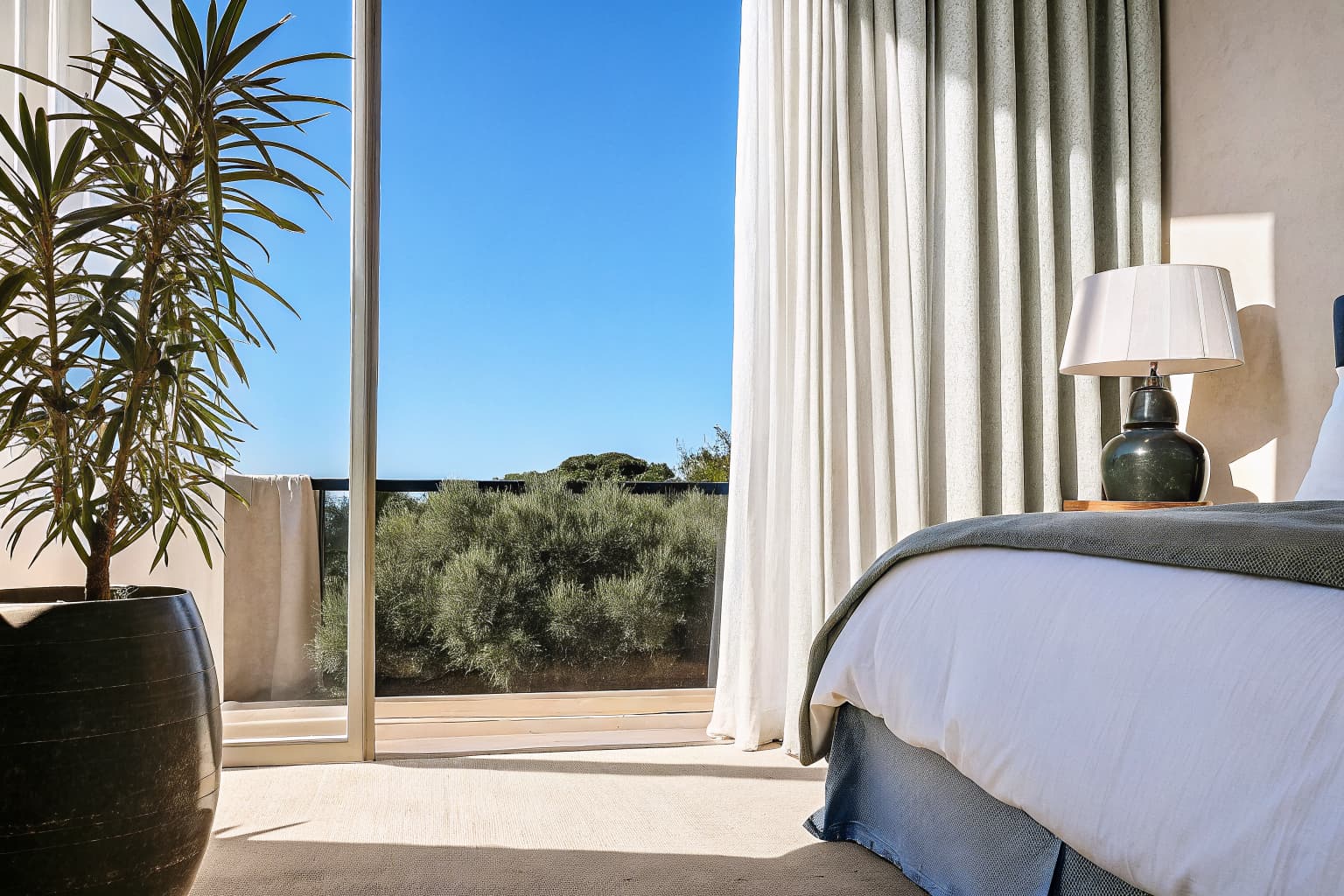
The bedroom’s primary task is rest and restoration. This makes it the most Yin room in your home by design. Yang energy in the bedroom — bright lights, sharp edges, mirrors facing the bed, electronics, intense color — disrupts the body’s natural transition into sleep and recovery.
Use soft, dimmable lighting — table lamps and wall sconces at low wattage, never bright overhead fluorescents.
Choose a palette of deep, cool tones: slate blue, dusty sage, warm charcoal, soft lavender, or deep navy.
Curved headboards, rounded furniture edges, and low-profile beds all reduce Yang sharpness.
Heavy curtains or blackout drapes strengthen Yin by cutting light and sound from the exterior.
Remove or cover mirrors that face the bed — mirrors carry Yang energy (reflective, activating) and disturb sleep chi.
Prioritize soft, natural textiles: linen, cotton, wool. Avoid synthetic fabrics, which carry static Yang charge.
The Living Room — Balanced (50% Yin / 50% Yang)
The living room is a transitional space — it hosts conversation and connection (Yang), but also rest and watching (Yin). It is the one room where true balance is the goal. Neither Yin nor Yang should dominate; they should coexist in a dynamic, comfortable equilibrium.
Layer your lighting: an overhead fixture for Yang (active) moments, floor lamps and table lamps for Yin (restorative) ones.
Choose a neutral or warm base palette with room for both warm accents (Yang) and cooler cushions or throws (Yin).
A sofa arrangement that curves slightly inward — facing each other — encourages connection without Yang confrontation.
Plants bring living Wood energy that bridges Yin and Yang. Group them near natural light sources.
Sound plays a critical role: a room that absorbs sound (heavy rugs, upholstered walls, bookshelves of books) naturally leans Yin — appropriate for a calming living space.
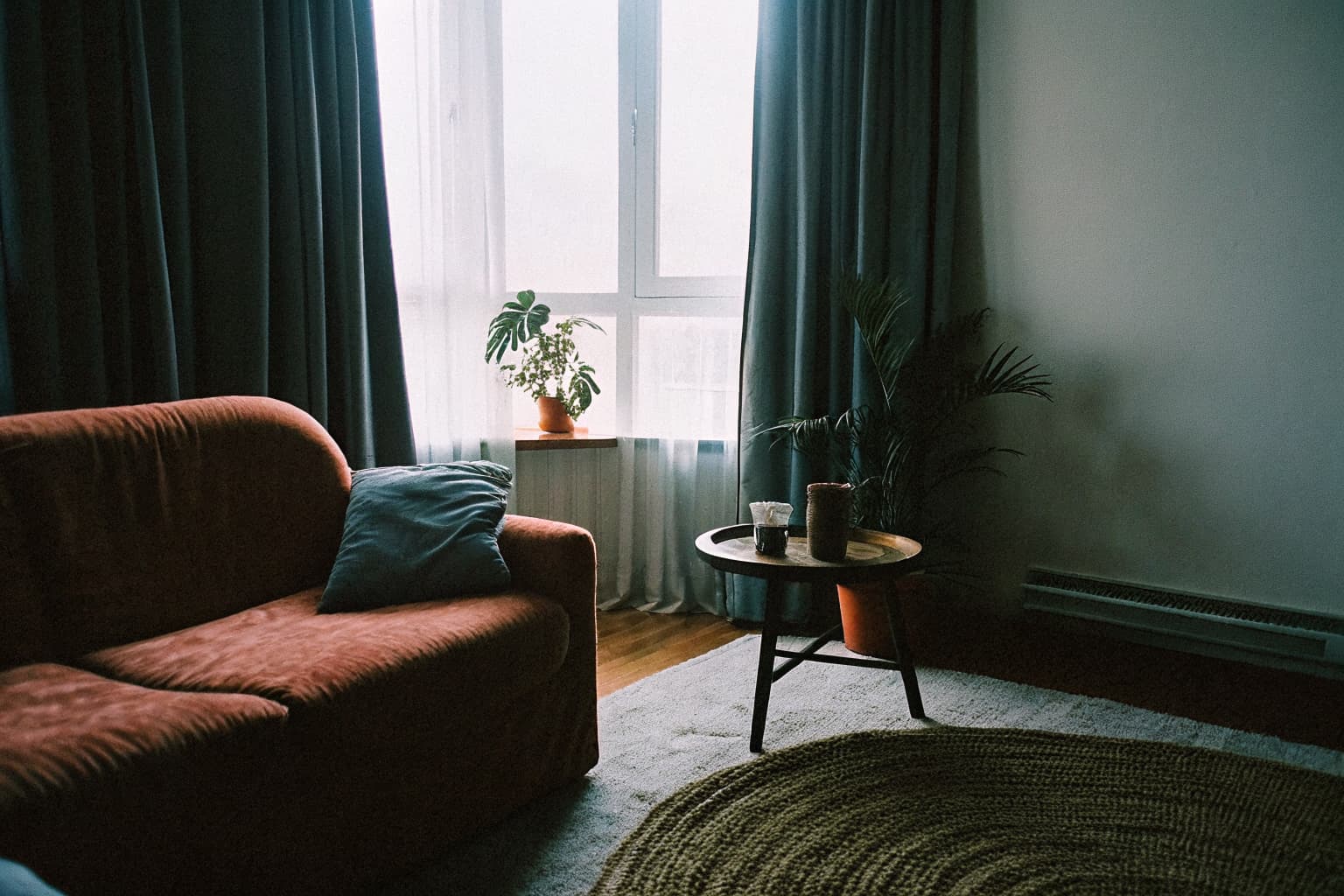
A balanced living room: soft curtains filter light, plants bring living chi, and muted tones create receptive calm without stagnation.
The Kitchen — Strongly Yang (70% Yang / 30% Yin)
The kitchen is the hearth of your home — the space of fire, nourishment, and transformation. Fire is the most Yang of the Five Elements, and the kitchen correctly carries strong Yang energy. Attempting to make a kitchen too Yin results in a space that feels heavy, uninviting, and difficult to cook in energetically.
Bright, clean lighting is essential — the kitchen should be the best-lit room in the home when active.
Warm yellows, terracotta, sage green, or cream tones all support nourishment and appetite without becoming harsh.
Keep surfaces clear. Clutter in the kitchen traps stale chi around food preparation — a direct Feng Shui health concern.
A small touch of Yin in the kitchen: a cluster of herbs on the windowsill, a soft textile on bar stools, a round clock rather than digital.
The stove is the most important Yang element in the home. Keep it clean, functional, and in a commanding position where the cook can see the room entrance.
The Home Office — Lightly Yang (60% Yang / 40% Yin)
The home office must support focused, productive action — a Yang task — but also the deep, sustained concentration that only comes from underlying Yin stability. A home office that is all Yang (bright, stimulating, noisy) produces bursts of activity followed by burnout. One with too much Yin produces creative ideas that never get executed.
Place the desk in the commanding position: facing the door, with a solid wall behind you and a view of the room.
Use good task lighting directed at work surfaces, but softer ambient lighting in the room's periphery.
A plant — particularly one with upward-growing leaves like a peace lily or pothos — supports Wood chi and sustained mental energy.
Limit the number of screens and reflective surfaces. Each additional screen surface introduces Yang stimulation that disrupts focus depth.
Introduce one Yin anchor: a weighted blanket draped over the chair, a small water feature on the windowsill, or a single piece of artwork in a cool, muted tone.
Sound matters: silence or very soft ambient sound (flowing water, low instrumental music) supports the Yin depth needed for sustained creative work.
The Bathroom — Yin-Leaning (65% Yin / 35% Yang)
The bathroom is governed by Water — the most Yin of the Five Elements. Its energetic task is cleansing and release. In Feng Shui, the bathroom has a complicated reputation because it drains chi — both literally and energetically. The antidote is intentional Yin design that makes the space feel like a sanctuary rather than a utility room.
Keep the toilet lid closed and the bathroom door shut when not in use — this contains the drain-chi effect.
Deep, rich Yin colors — slate, charcoal, deep sage, black tile with white grout — make bathrooms feel luxurious rather than cold.
Introduce living plants (pothos, spider plant, ferns all thrive in bathroom humidity) to counteract Water’s downward drain energy with upward Wood chi.
Warm-toned lighting from wall sconces rather than cold overhead lights transforms a bathroom from functional to restorative.
Natural materials — stone, wood, linen towels, clay soap dishes — strengthen the Yin quality without tipping into stagnation.
Quick Reference: Yin–Yang Ratios by Room
Rest & restoration
Cleansing & release
Connection & rest
Focused productivity
Nourishment & transformation
Three First Steps to Increase Yin Where You Need It
Audit Your Lighting Layer by Layer
Walk through each room at night and assess your light sources. A room with only one overhead source is almost always too Yang — it casts harsh shadows and activates the nervous system. Add a floor lamp, a table lamp, or plug-in wall sconces. Yin lighting is always layered, always warm-toned, and always dimmable.
Introduce One Soft Textile to Every Yang-Heavy Space
A weighted throw, a linen cushion, a wool rug — each one introduces Yin through texture, weight, and sound absorption. Start with the room that feels the most wired or difficult to relax in. A single heavy-knit throw over a sofa can shift the room's energy perceptibly within minutes.
Add a Living Water or Plant Element to Yin-Deficient Spaces
A small tabletop water feature, a glass vase with flowing plants in water, or a humidity-loving fern in a corner each introduce Water chi — the most Yin of all the elements. In a kitchen or office, a single water feature near the corner opposite the stove or desk activates the Water-Wood relationship, grounding Yang energy without suppressing it.
“A home that knows how to rest is a home that knows how to support life. Yin energy is not the absence of vitality — it is the ground from which all vitality grows.”
Signs Your Home Has Too Little Yin Energy
You feel alert and stimulated in every room — including the bedroom — and struggle to shift into rest mode.
You rarely feel deeply rested even after sleeping a full night.
Guests rarely linger — the home feels energizing for visits but not for settling into.
You've noticed more anxiety or restlessness at home compared to when you're outdoors or in quieter environments.
The home feels louder than it looks — hard surfaces, open layouts, and bright lights amplify sound and stimulation.
You keep adding Yang elements (color, decor, artwork, tech) hoping the home will feel more alive — but something still feels flat or unsatisfying.
The Takeaway
The most energetically coherent homes are not the ones that feel the most designed — they are the ones where every room knows its job. A bedroom that is deeply Yin lets you sleep. A kitchen that is confidently Yang lets you cook and create. A living room that balances both lets you fully inhabit whatever mood you bring to it. Start with one room, shift one element — the lighting, a textile, a plant — and notice what changes in how the space feels to live in. That is Feng Shui in practice: not grand gestures, but small, intentional alignments that compound over time into a home that genuinely supports you.
Share this article
Want Your Home’s Energy Calibrated Room by Room?
Our Feng Shui consultants assess each space’s current Yin–Yang balance and provide a personalized plan to bring every room into alignment with its purpose and your life.
Book a Consultation