The ‘Lived-In’ Look: Wabi-Sabi Design Choices That Keep Clutter at Bay
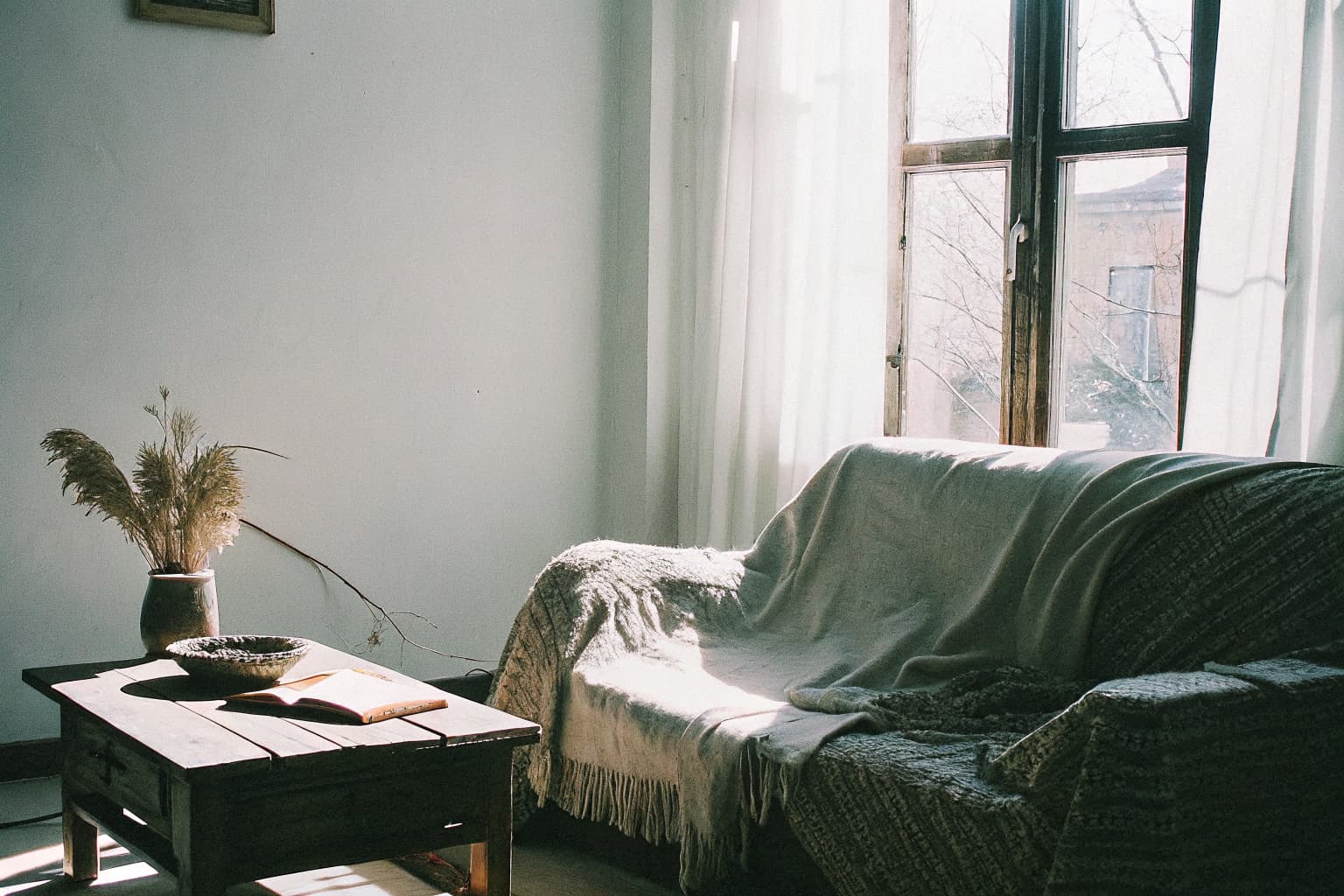
There is a room that exists somewhere between perfectly styled and comfortably real — where a linen throw lies casually across the arm of a sofa, a ceramic bowl holds a few smooth river stones, and afternoon light falls across a weathered wooden table. Nothing is forced. Nothing is staged. Yet everything feels intentional. This is the lived-in look, and it is one of the most powerful — and most misunderstood — aesthetics in interior design.
Rooted in the Japanese philosophy of wabi-sabi — the art of finding beauty in imperfection, transience, and simplicity — the lived-in look is not about letting go of standards. It is about trading sterile perfection for authentic warmth. And, perhaps surprisingly, it is one of the best frameworks for keeping a home genuinely clutter-free.
What Is Wabi-Sabi, Really?
Wabi-sabi is a worldview that embraces three truths: nothing lasts, nothing is finished, and nothing is perfect. In design terms, this translates into spaces that honour natural materials, welcome the marks of time, and resist the urge to fill every surface and corner. A cracked clay bowl. A worn wooden beam. A linen cushion that has softened with use. These are not flaws to be hidden — they are the story of the space.
In Feng Shui, wabi-sabi aligns beautifully with the principle of chi flow — the movement of life-force energy through a space. Clutter blocks chi. Rigid perfection creates tension. But a home that breathes, that holds space for natural imperfection, allows energy to circulate freely, supporting the well-being of everyone who lives there.
A truly lived-in room needs no apology — natural light, honest materials, and intentional simplicity do all the work.
Five Wabi-Sabi Design Choices That Create the Lived-In Look
Choose Natural Materials with Character
Smooth, flawless surfaces announce their artificiality. Instead, reach for materials that carry their own history: aged linen, rough-hewn oak, rattan, raw cotton, unpolished stone, and handmade ceramics. The slight irregularities in hand-thrown pottery, the grain variation in a reclaimed wood shelf, the gentle wrinkle in an unwashed linen cushion — these are the textures that make a room feel inhabited and alive.
Edit Ruthlessly, Then Breathe
Wabi-sabi is not maximalism in disguise. The lived-in look works precisely because it is spare. Every object earns its place not by being beautiful in a conventional sense, but by carrying meaning or genuine utility. Remove anything that neither serves a function nor holds emotional resonance. What remains will have room to breathe — and that breathing space is what chi needs to move.
Invite Softness and Layered Texture
Rigid rooms feel cold; layered rooms feel inhabited. A wabi-sabi interior layers tactile softness: a chunky knit throw folded (not draped precisely) over a sofa arm, a jute rug layered over natural wood floors, a stack of worn books beside a terracotta pot. Layers create warmth without adding visual noise — the key is variation in texture, not multiplication of objects.
Bring in the Transient — Botanicals, Light, and Seasons
Wabi-sabi celebrates impermanence. Dried pampas grass, a branch of eucalyptus, a bowl of pinecones — these are objects that change with time and with the season. They remind us that the home is alive, not frozen. Natural light, allowed to move across surfaces throughout the day, does the same: no two moments look the same, and that gentle variability is deeply soothing to the nervous system.
Let Patina Tell the Story
Resist the urge to replace aged pieces with new ones simply because they show wear. A coffee table with a ring stain from ten years of morning tea has a story to tell. A worn threshold where feet have passed for decades holds something irreplaceable. In Feng Shui terms, a home that honours its own history carries a grounded, rooted energy — and that rootedness transfers to the people living within it.
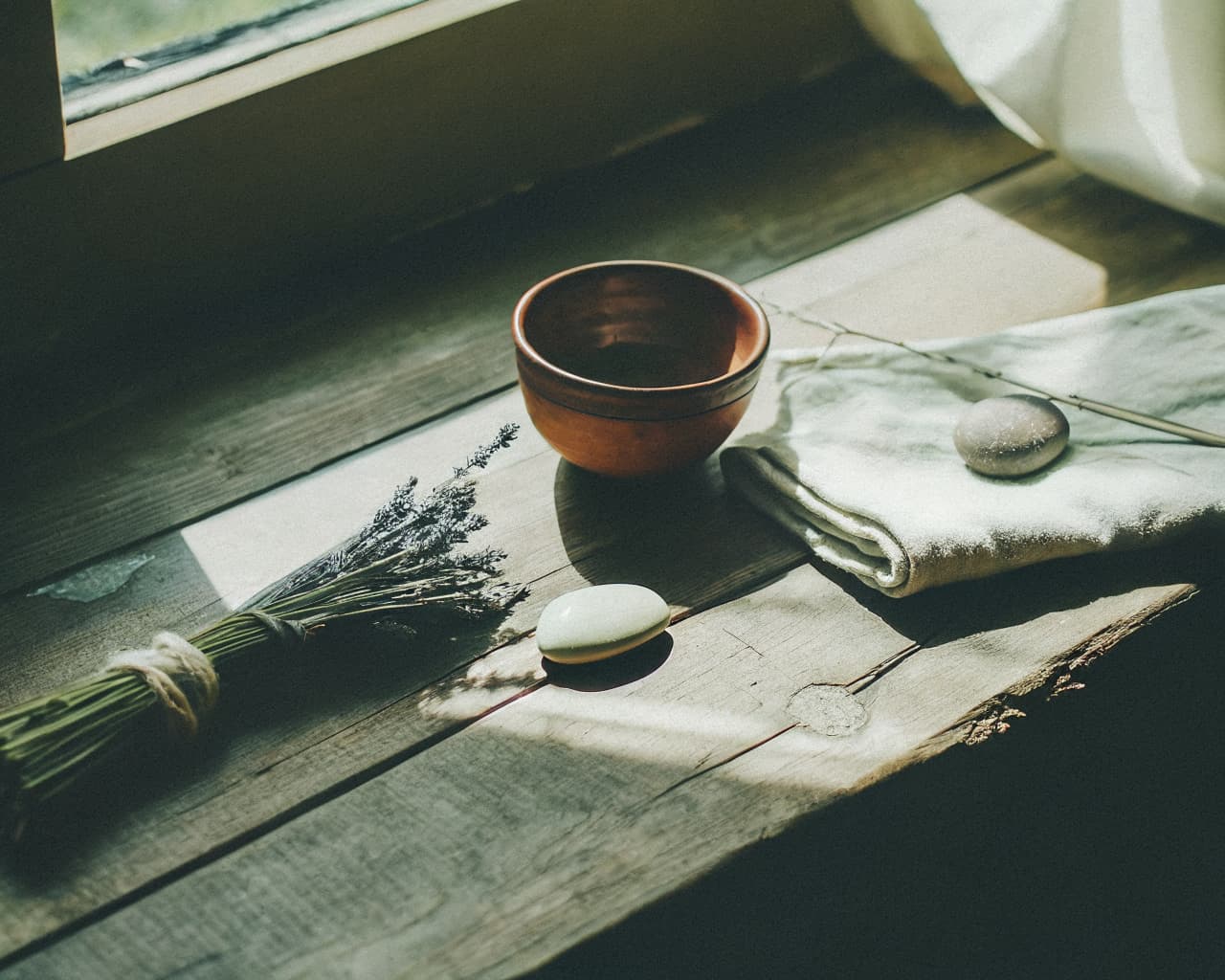
A terracotta bowl, dried herbs, smooth stones — each object intentional, nothing excessive.
Keeping Clutter at Bay the Wabi-Sabi Way
Here is the paradox: the lived-in look seems relaxed, but it requires a more disciplined eye than a conventional tidy room. Wabi-sabi is not permission to accumulate — it is a framework for choosing differently. Where other decluttering systems ask you to discard what doesn’t “spark joy,” wabi-sabi asks a deeper question: does this object belong to this room’s story?
Practical Clutter Guidelines
Limit surfaces to three to five intentional objects maximum — negative space is part of the composition.
Store functional items out of sight; only objects with beauty or meaning earn visible placement.
When you bring something new in, something else must leave — a one-in, one-out discipline that prevents slow accumulation.
Use closed storage (baskets, lidded ceramics, linen pouches) to contain the necessary without visual noise.
Review each room seasonally: what suited winter may crowd the lightness of summer. Let the space evolve.
Where Wabi-Sabi Meets Feng Shui
Both wabi-sabi and Feng Shui share a foundational belief: the condition of our spaces profoundly affects the condition of our inner lives. Feng Shui gives us the energetic map — identifying the zones of a home that govern wealth, relationships, health, and creativity. Wabi-sabi gives us the aesthetic language — showing us how to furnish those zones in a way that feels honest, grounded, and truly restorative.
Applied together, they produce homes that are not only beautiful but deeply functional on an energetic level. A bedroom furnished with wabi-sabi sensibility — rough linen bedding, a single ceramic lamp, a dried botanical on the windowsill, no digital clutter — creates conditions for genuine rest. A living room with space to breathe and honest materials allows connection to happen naturally. A workspace stripped back to essentials, its surfaces honest and uncluttered, allows focus and creativity to rise.
“In wabi-sabi, the goal is not a perfect room. It is a room that feels like a long exhale.”
The Takeaway
The lived-in look is not a style choice — it is a stance. It says: I choose authenticity over performance. I choose warmth over perfection. I choose the honest mark of time over the artificial gleam of the perpetually new. When guided by wabi-sabi principles and grounded in Feng Shui awareness, this stance creates homes that are genuinely clutter-free, energetically alive, and deeply personal. Spaces where real life can unfold without apology.
Share this article
Ready to Bring This Feeling Home?
Our Feng Shui consultants help you design spaces that are warm, intentional, and genuinely clutter-free — grounded in both ancient wisdom and modern livability.
Book a Consultation